How Do I Choose the Right Real Estate Agent? A Smart Seller’s Guide
March 23, 2026
March 23, 2026
Choosing the right real estate agent can feel a little like online dating, a job interview, and a major financial decision all rolled into one.
You want someone confident, experienced, and easy to talk to. But you also want someone who knows your market, prices your home correctly, answers your calls, and doesn’t disappear the minute the sign goes in the yard.
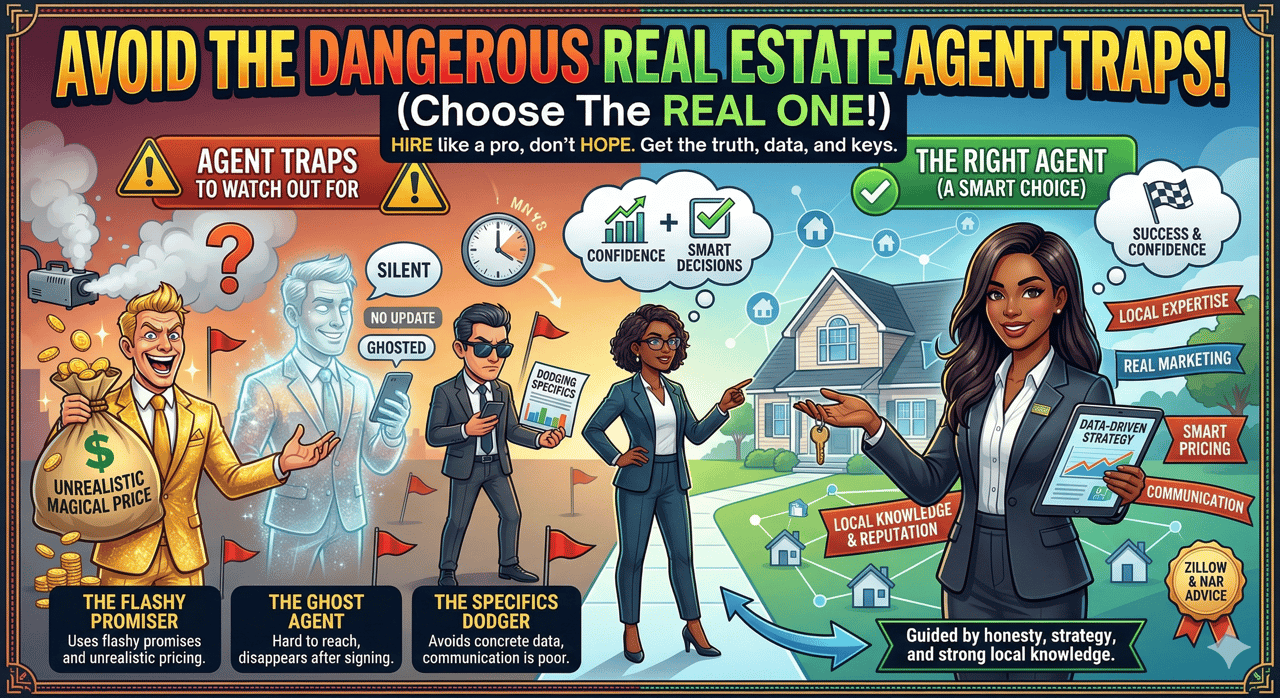
And here’s the truth: the best real estate agent is not always the one with the flashiest branding, the biggest promises, or the lowest commission. The right agent is the one who can guide you with honesty, strategy, and strong local knowledge from start to finish. That lines up closely with current consumer guidance from NAR and Zillow, which both emphasize local expertise, service clarity, communication, and asking structured questions before hiring.
A lot of homeowners pick an agent the same way they pick a restaurant on a tired Friday night: the first decent option wins.
That is not the move.
NAR reports that 81% of recent sellers contacted only one agent before choosing who to work with. That may be convenient, but it is not always wise. Selling a home is one of the biggest financial transactions most people make, so this decision deserves a little more care than “my cousin liked her.”
The smartest approach is to think like an employer. You are hiring someone to represent your money, your timeline, your home, and your peace of mind.
When people search “how to find a good real estate agent” or “how to choose a realtor,” they are usually trying to answer one simple question:
Can I trust this person to do a great job with something that really matters?
That comes down to a few things.
Experience matters, but not all experience is equal.
An agent who has sold 100 homes across a broad area may still be less helpful than an agent who deeply understands your neighborhood, buyer pool, price range, and competition. NAR specifically advises sellers to ask whether the agent is familiar with the market where the home is being sold, because local knowledge helps shape pricing and marketing strategy.
Ask:
You do not need a lecture with 47 charts. You need clear answers that make sense.
A polished presentation is nice. A strong reputation is better.
According to NAR’s 2024 Profile of Home Buyers and Sellers, an agent’s reputation remains the most important factor sellers use when selecting an agent, with honesty, trustworthiness, and neighborhood knowledge also standing out in NAR’s consumer research.
That means reviews matter. Referrals matter. Repeat business matters.
Look for:
A lot of agents are good at being visible. Fewer are good at being excellent.
This is one of the most underrated parts of choosing the right real estate agent.
If you like quick updates and your agent communicates like a mysterious 1800s pen pal, that will get old fast.
Zillow recommends getting clear on communication preferences early, including how often updates will happen and what working together will feel like.
Ask:
The right answer is not one-size-fits-all. The right answer is the one that works for you.
If an agent gives you the highest suggested list price, that does not automatically mean they are the best real estate agent to sell your house.
Sometimes it means they are telling you what you want to hear.
A strong agent should be able to walk you through how they arrived at a price, what the comparable sales show, what buyers are likely to compare your home against, and how your condition and location affect value. NAR’s consumer materials also emphasize that sellers should ask how price is determined and what goes into the listing strategy.
A good pricing conversation should feel grounded, not theatrical.
If the number sounds amazing but the explanation is fuzzy, pay attention.
“Don’t worry, I’ll market it everywhere” is not a strategy.
A real marketing plan should include professional photography, compelling listing copy, online exposure, showing strategy, buyer-agent outreach, and a plan for handling feedback if the home does not get traction right away. NAR and Zillow both point sellers toward asking exactly what services are included and how the property will be marketed.
Ask:
That last question matters more than people think.
Let’s make this part fun and useful.
If you are wondering how to choose the best realtor, here are a few warning signs that deserve a raised eyebrow:
If the agent gives a polished speech but never really asks about your goals, timeline, concerns, or what matters most to you, that is a problem. The right fit should be strategic, but also curious.
If you ask about recent sales, communication, marketing, or pricing and get a fog machine instead of an answer, keep looking.
Overpricing a listing can lead to fewer showings, stale market time, and price reductions later. A serious agent should explain the logic behind the number, not just hand you the number you were hoping for.
This is your preview.
If communication already feels patchy now, it usually does not improve later.
Commission is important, but choosing based only on the cheapest option can backfire if the service, marketing, or negotiation is weak. Recent seller-focused guidance across major real estate platforms repeatedly points sellers back to value, services, and track record rather than price alone.
This is one of the biggest related search themes online, and for good reason. Zillow and NAR both publish seller question lists because comparing agents works best when you ask each one the same core questions.
Here are some of the best ones:
Those questions will tell you more than a glossy listing presentation ever will.
This part is not exciting, but it is smart.
If you are in California, you can verify whether an agent or broker is licensed through the California Department of Real Estate’s public license lookup. That gives consumers a direct way to confirm a license before moving forward.
Basic due diligence matters.
Because “seems legit” is not a real screening system.
Referrals are still huge. NAR says 66% of recent sellers either used an agent who was referred to them or one they had worked with before. That makes sense. People trust people they know.
But a referral is a starting point, not the final answer.
Your friend may have loved an agent who was perfect for a condo sale, a quick move, or a totally different personality. That does not automatically make that agent the right fit for your home, your timeline, or your goals.
Take the referral. Then still do the homework.
This might be the simplest test of all.
After talking with an agent, do you feel:
The right agent does not just “sell themselves.” They help you understand the process, think strategically, and move forward with more confidence.
That is what real value looks like.
If you are trying to figure out how to choose the right real estate agent, here is the bottom line:
Do not choose based only on a referral.
Do not choose based only on commission.
Do not choose based only on the highest price opinion.
And definitely do not choose based only on who has the nicest headshot.
Choose the agent who combines:
The right agent is not just there to put your home on the market.
The right agent helps you make good decisions all the way through the sale.
And that can make a very big difference.
You’ve got questions and we can’t wait to answer them.