Should Seniors Sell Before or After Finding Their Next Home?
May 29, 2026
May 29, 2026
Most seniors should start by identifying their next-home plan before putting their current home on the market, but that does not always mean they need to buy first. The safest choice depends on their finances, the local market, how much support they have, and how comfortable they are with timing, temporary housing, and carrying costs.
For many senior homeowners, this decision is not just financial. It is emotional and practical too.
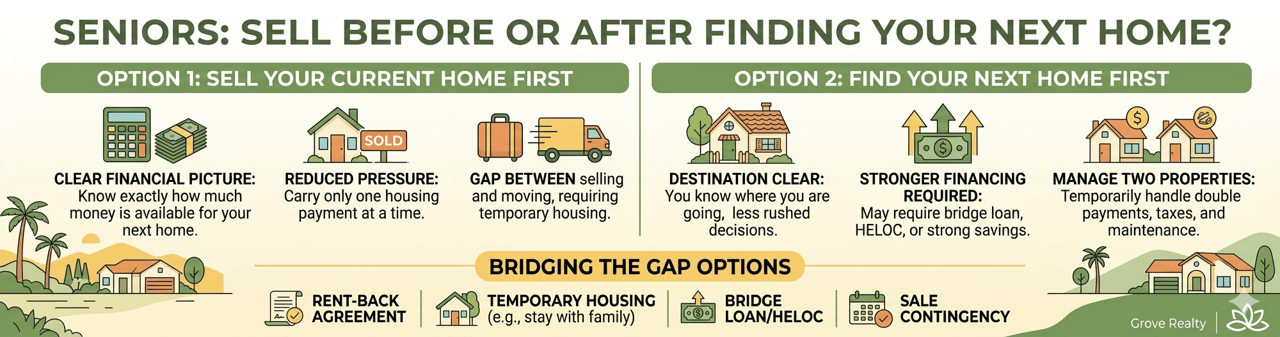
Selling first can give a clearer picture of how much money is available for the next home. It can also reduce the pressure of carrying two homes at once. The downside is that it may create a gap between selling and moving, which can mean staying with family, renting temporarily, or arranging a short-term rent-back after closing.
Finding the next home first can feel more comfortable because the seller knows where they are going. This can be especially helpful if they need a single-story home, a 55+ community, a smaller yard, or a location closer to family or medical care. The challenge is that buying first may require stronger financing, a bridge loan, a home equity option, or the ability to manage two properties for a short time.
For Riverside County seniors who are still early in the process, Grove Realty has a helpful guide on Selling a Home as a Senior in Riverside County.
Timing matters because a rushed move can make a big life change feel harder than it needs to be.
A senior who sells too quickly without a next step may feel pressured to choose a home that is not the right fit. A senior who waits too long to sell may miss a strong market window or feel stuck managing a home that no longer works for them.
The best plan usually starts with three questions:
Do I need the money from my current home to buy the next one?
Do I already know where I want to move?
How much stress can I comfortably handle during the transition?
A trusted local agent can help compare the options before anything is listed. Marni Jimenez often helps Riverside County seniors and downsizers think through this kind of move in a calm, practical way.
A senior moving into a 55+ community may want to find the right community first, then prepare the current home for sale. Inventory can be limited, so knowing the preferred area, monthly costs, HOA rules, and floor plan needs can help avoid a rushed decision.
A homeowner with a lot of equity but limited monthly income may choose to sell first. This can make the next purchase cleaner because they know their net proceeds and may not need to qualify while still owning the current home.
A senior moving closer to adult children may choose a flexible plan. They might list their home, negotiate a rent-back, and use that extra time to close on the next property or coordinate the move with family.
A homeowner who wants to avoid a double move may explore buying first. This may work if they have enough savings, strong financing, or access to equity. It can also be helpful when the next home needs light repairs before move-in.
A seller who has lived in the same house for decades may need extra preparation time. Sorting belongings, choosing what to keep, making small repairs, and involving family can take longer than expected. In that case, planning the next step before listing can reduce stress.
There is no one right answer for every senior seller.
Selling first may be better when the homeowner needs the sale proceeds, wants a clear budget, or does not want the risk of two housing payments.
Finding the next home first may be better when the homeowner has very specific needs, such as no stairs, less yardwork, a certain neighborhood, or proximity to family.
A rent-back can sometimes help bridge the gap. This allows the seller to close the sale and remain in the home for a short agreed-upon period. It depends on the buyer, the loan type, and the terms both sides accept.
A sale contingency can also help, but it may make an offer less competitive if the next-home market is active.
A bridge loan or home equity option may work for some homeowners, but it should be reviewed carefully with a lender or financial advisor. These tools can add flexibility, but they also come with costs and risk.
Seniors should also think about taxes, insurance, estate planning, property tax rules, moving costs, and long-term care needs. A good real estate plan should fit the whole picture, not just the sale price.
Before deciding whether to sell first or buy first, ask a local Realtor to prepare a simple move plan that includes your home value, likely net proceeds, next-home options, and a realistic timeline.
You’ve got questions and we can’t wait to answer them.