What Does a Real Estate Agent Really Do to Protect Your Home Sale?
July 24, 2026
July 24, 2026
A real estate agent protects your home sale by helping you price correctly, prepare the property, market it effectively, evaluate offers, negotiate terms, manage paperwork, and keep the transaction moving toward closing. A good listing agent also looks for problems early, explains your options clearly, and helps you avoid decisions that could cost you time, money, or leverage.
Selling a home involves much more than placing it in the MLS and waiting for an offer. Your agent represents your interests throughout the transaction and helps you make informed decisions from the first planning conversation through the final closing.
A seller’s agent generally owes duties to the seller and works to achieve the best available price and terms based on the seller’s priorities. The exact services should be explained in the listing agreement before the home is placed on the market.
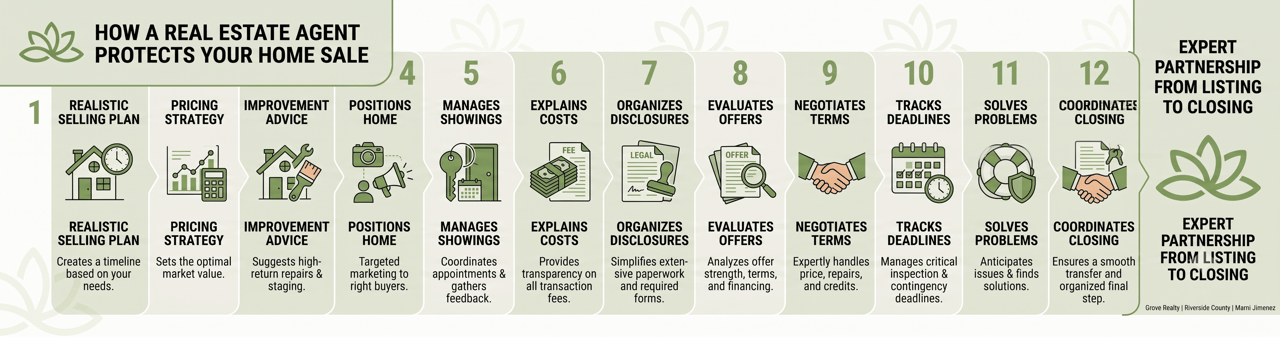
Here are 12 important ways an experienced agent can help protect your sale.
Before discussing photography or open houses, a good agent should learn why you are selling, where you are moving, and how quickly you need the sale completed.
A homeowner who is relocating for work may need a different plan than someone who is downsizing from a longtime family home. Your timeline affects pricing, preparation, offer decisions, and the type of closing terms that may work best.
For homeowners making a lifestyle change, this guide to downsizing from a larger home in Riverside County offers a helpful place to begin.
Your asking price should not be based only on an online estimate, a neighbor’s sale, or the amount you hope to receive.
An experienced agent reviews recent comparable sales, current competition, pending homes, property condition, location, upgrades, buyer activity, and changing market conditions. The goal is to choose a price that attracts serious buyers without unnecessarily leaving money on the table.
Pricing too high can cause a home to miss its strongest period of buyer attention. A home that sits for too long may eventually require a price reduction and give buyers more negotiating power.
You can learn more about the factors behind a local valuation in What Is My Riverside County Home Worth in Today’s Market?.
Not every home needs a full renovation before it is sold. In many cases, cleaning, decluttering, improving lighting, completing small repairs, and refreshing a few visible areas can make a meaningful difference.
Your agent can help you separate improvements that may strengthen the sale from projects that are unlikely to provide a worthwhile return.
For example, replacing worn carpet or correcting obvious deferred maintenance may help buyers feel more confident. Remodeling an entire kitchen shortly before selling may not make financial sense.
The right advice can help you avoid both underspending and overspending.
Marketing is not simply posting photographs online. It starts with understanding which features are most likely to matter to the buyers considering your area and price range.
A strong marketing plan may include professional photography, thoughtful listing copy, online promotion, agent outreach, open houses, private showings, signage, and follow-up with interested buyers.
The agent should also decide how to present the home’s layout, improvements, neighborhood, outdoor space, energy features, or flexible living areas in a way that feels accurate and useful.
The goal is not to make the home sound perfect. It is to help the right buyers recognize why it may fit their needs.
Showings create practical and emotional challenges, especially when the seller is still living in the home.
Your agent helps coordinate appointments, communicate access instructions, answer questions from other agents, and follow up after showings. Open houses can also help an agent learn what buyers notice, what questions they ask, and whether the price or presentation needs attention.
Useful feedback should be viewed as information, not criticism. If several buyers raise the same concern, your agent can help you decide whether to address it, adjust the marketing, or stay with the original plan.
The listing agreement should explain the services being provided, the length of the agreement, how the home will be marketed, and how the brokerage will be compensated.
Real estate compensation is negotiable and should be discussed clearly before you sign. Sellers may also need to consider escrow fees, title charges, inspections, repairs, loan payoff costs, concessions, and other transaction expenses.
A responsible agent should help you estimate your likely net proceeds, not simply focus on the selling price.
California home sales can involve extensive disclosures and supporting documents. Depending on the property, sellers may need information concerning the home’s condition, repairs, permits, HOA, solar system, natural hazards, title, loans, or other material facts.
Your agent cannot complete disclosures for you or decide what you personally know. However, the agent can explain the process, provide the appropriate forms, help you stay organized, and encourage you to disclose known issues honestly.
California agents also have responsibilities involving a visual inspection and disclosure of readily observable defects in many residential transactions.
Preparing documents early can reduce delays and last-minute questions. This local guide explains what documents may be needed to sell a home in Riverside County.
The highest price is not always the strongest offer.
Your agent should help you review the buyer’s financing, down payment, deposit, contingencies, requested credits, proposed closing date, appraisal terms, included property, and any conditions attached to the purchase.
For example, one buyer may offer more but include uncertain financing and several requests. Another buyer may offer slightly less with stronger financing, fewer contingencies, and a timeline that works better for your move.
Your agent should explain the benefits and risks, but the final decision remains yours.
Negotiation often continues after an offer is accepted.
Your agent may need to negotiate inspection requests, repair credits, closing costs, appraisal issues, personal property, possession dates, contingency extensions, and changes to the original agreement.
In a multiple-offer situation, the seller may accept one offer, counter an offer, or ask several buyers to improve their terms. Each approach has possible benefits and risks, which is why the strategy should be discussed carefully.
Strong negotiation is not always aggressive. It is calm, informed, and focused on protecting the seller’s priorities without unnecessarily damaging the transaction.
After the contract is signed, the transaction enters a detailed period involving inspections, appraisal, financing, title work, disclosures, contingency periods, escrow instructions, and document delivery.
A missed deadline or unanswered request can weaken the seller’s position or delay closing.
Your agent helps track the contract, communicate with the buyer’s agent, coordinate access, review requests, and make sure you understand what needs your attention.
The inspector and appraiser remain independent professionals. Your agent does not control their findings, but can help you understand the process and respond appropriately.
Most transactions encounter at least a few unexpected issues.
An inspection may uncover a repair. The appraisal may come in below the purchase price. The buyer’s lender may need more time. A title issue, solar agreement, insurance concern, or missing document may need to be resolved.
A good agent does not promise that nothing will go wrong. Instead, the agent communicates quickly, gathers the right information, presents possible solutions, and helps you decide how to respond.
Sometimes protecting the sale means negotiating a reasonable solution. Other times, it means advising the seller not to accept a request that creates too much risk.
As closing approaches, your agent stays in contact with escrow, the buyer’s agent, and other professionals involved in the transaction.
The agent may help confirm that documents have been signed, agreed repairs are completed, contingencies are addressed, the final walkthrough is scheduled, and possession details are understood.
Your agent should also help you prepare for practical details such as keys, remotes, moving arrangements, utilities, and the date the buyer will receive access.
The goal is a closing that feels organized rather than rushed or confusing.
A home is often one of a person’s largest financial assets. Small decisions involving price, disclosures, contingencies, repairs, or timing can have a meaningful effect on the final outcome.
An agent cannot remove every risk or guarantee that a transaction will close. What an experienced agent can do is reduce avoidable mistakes, provide context, protect your negotiating position, and help you respond thoughtfully when the situation changes.
This support can be especially valuable when you are selling a longtime home, coordinating another purchase, moving out of the area, or helping an older family member prepare for a move.
Suppose one buyer offers $10,000 more than another but has limited cash, a small deposit, and uncertain financing.
Your agent may explain that the higher price looks attractive, but it also carries a greater chance of appraisal, financing, or closing problems. You can then decide whether the extra money is worth the added risk.
A buyer may ask the seller to repair several items or provide a credit.
Your agent can help you review the request, consider whether the issues were previously disclosed, estimate the practical cost, and negotiate a response. You might agree to one important repair while declining smaller cosmetic requests.
A seller may receive a strong offer but need extra time after closing to move into the next home.
The agent can explore options such as a later closing date or a seller possession agreement. Each option has risks and should be documented correctly, but thoughtful negotiation may help the seller avoid an unnecessarily rushed move.
A real estate agent is an important advisor, but should not replace a qualified attorney, tax professional, home inspector, contractor, appraiser, insurance professional, or financial advisor.
You should expect your agent to recognize when a question falls outside the agent’s expertise and recommend that you speak with the right professional.
You should also ask what services are included before choosing an agent. Some listing arrangements provide full representation, while others offer limited marketing or administrative support. The listing agreement should clearly describe what the agent will do.
Experience also matters. An agent who understands your neighborhood, property type, timeline, and reason for moving will usually be better prepared to anticipate the issues that may affect your sale.
Schedule a no-pressure conversation with a local agent before making repairs or setting a price. Riverside County homeowners can learn more about Grove Realty or speak with Marni Jimenez about their home, timeline, and selling options.
You’ve got questions and we can’t wait to answer them.