What Should I Fix Before Selling My House?
April 1, 2026
April 1, 2026
If you're thinking about selling, it’s easy to assume you need to pour money into updates before putting your home on the market. In most cases, you don’t.
The truth is simple: not everything needs to be fixed, and not every improvement will help you sell faster or for more money.
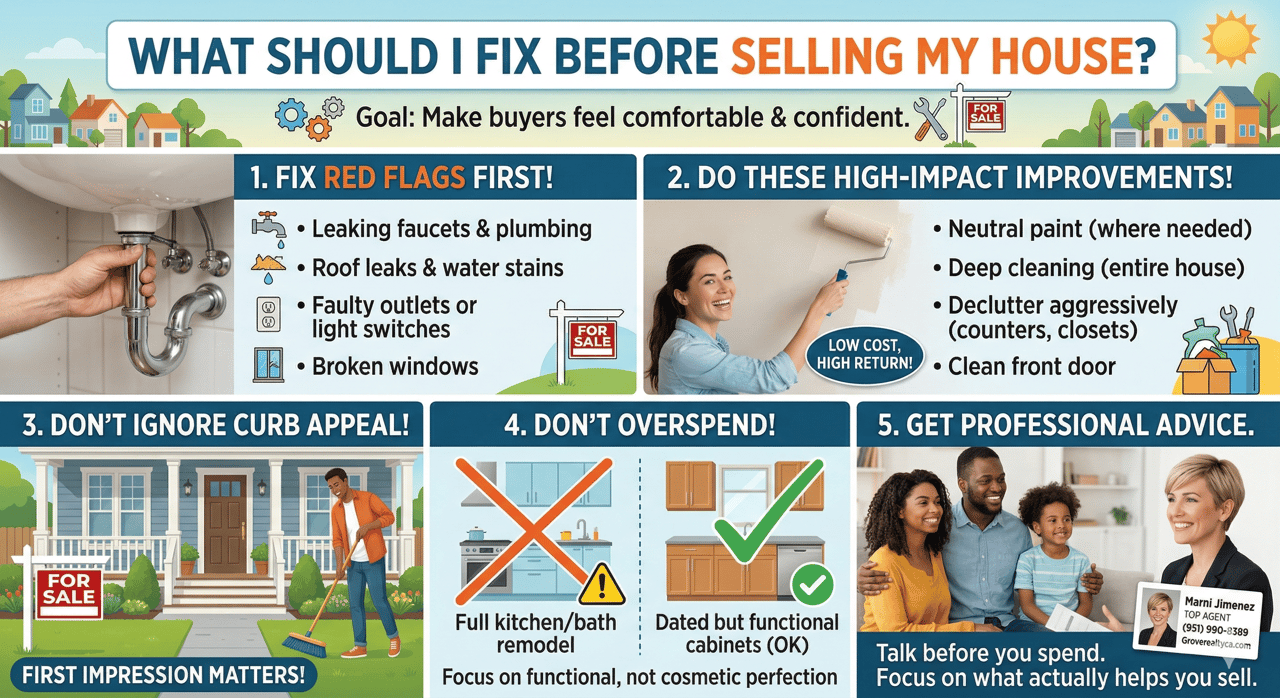
The goal is not to make your house perfect. The goal is to make buyers feel comfortable, confident, and willing to make a strong offer.
Buyers can accept a home that feels a little dated. What they struggle with is a home that feels neglected.
Anything that suggests future expense or hidden problems can quickly turn interest into doubt.
Focus first on issues like:
These are the types of problems that make buyers think, “What else is wrong with this house?” Once that happens, they often start lowering their offer in their head before they ever put one on paper.
This is one of the biggest mistakes sellers make.
They assume they need to fully remodel the kitchen or redo bathrooms to compete. Sometimes that works. Often, it doesn’t.
Be cautious about spending heavily on:
A home does not need to look brand new to sell well. It needs to feel clean, cared for, and priced correctly.
If your kitchen is functional and in decent shape, you may be better off leaving it alone. The same goes for bathrooms that are older but still clean and working properly.
These may not be exciting fixes, but they often have the biggest impact.
Fresh paint in a light, neutral color can make a home feel brighter and more move-in ready. Deep cleaning can instantly improve the way buyers experience the home. And decluttering helps rooms feel larger, calmer, and easier to picture as their own.
Before listing, make time for:
These lower-cost improvements often do more for your sale than high-dollar projects.
Buyers form an opinion before they ever step inside.
If the outside of the house feels neglected, many buyers assume the inside has been treated the same way.
You do not need elaborate landscaping. You just need the home to look cared for.
That usually means:
A clean, tidy exterior sets the tone for the rest of the showing.
This is where sellers often waste money.
A house can be outdated without being a problem. Old cabinets, older tile, laminate counters, or a less modern style do not automatically need to be replaced before selling.
If something is purely cosmetic, buyers may accept it — especially if the home is clean, well presented, and priced appropriately.
Trying to update everything before listing can lead to unnecessary stress and overspending.
Not every seller wants to spend weeks fixing things up. And not every house needs it.
If your home needs a long list of repairs, or you simply don’t want to take on the cost and disruption, selling as-is may be the right move.
That said, even homes sold as-is usually benefit from basic preparation. Cleaning, decluttering, and handling a few obvious issues can still make a meaningful difference.
Before you start making repairs, it helps to get clear advice based on your specific home, neighborhood, and goals.
What makes sense for one seller may be a complete waste of money for another.
That’s where working with an experienced local agent matters. Marni Jimenez, a top real estate agent in Riverside, helps sellers look at their home strategically so they can focus on the repairs and improvements that actually matter — and skip the ones that don’t.
Here’s the bottom line:
Fix what raises red flags. Skip what won’t give you a real return. Clean thoroughly. Declutter aggressively. Focus on making the home feel well cared for.
That’s usually what helps a house sell, not chasing perfection.
If you're thinking about selling and want honest guidance on what is worth fixing before you list, contact us to talk through your next steps.
You’ve got questions and we can’t wait to answer them.