Will Buyers Be Concerned About Taxes, Insurance, Fire Zones, or Flood Zones on My Property?
May 1, 2026
May 1, 2026
Yes, buyers may be concerned about taxes, insurance, fire zones, or flood zones because those details can affect their monthly payment, loan approval, insurance options, and overall comfort with the home. That does not mean your property will be hard to sell. It means these items should be handled clearly and early so buyers feel informed instead of surprised.
Most buyers are not only looking at the price of the home. They are trying to understand the full cost and risk of owning it.
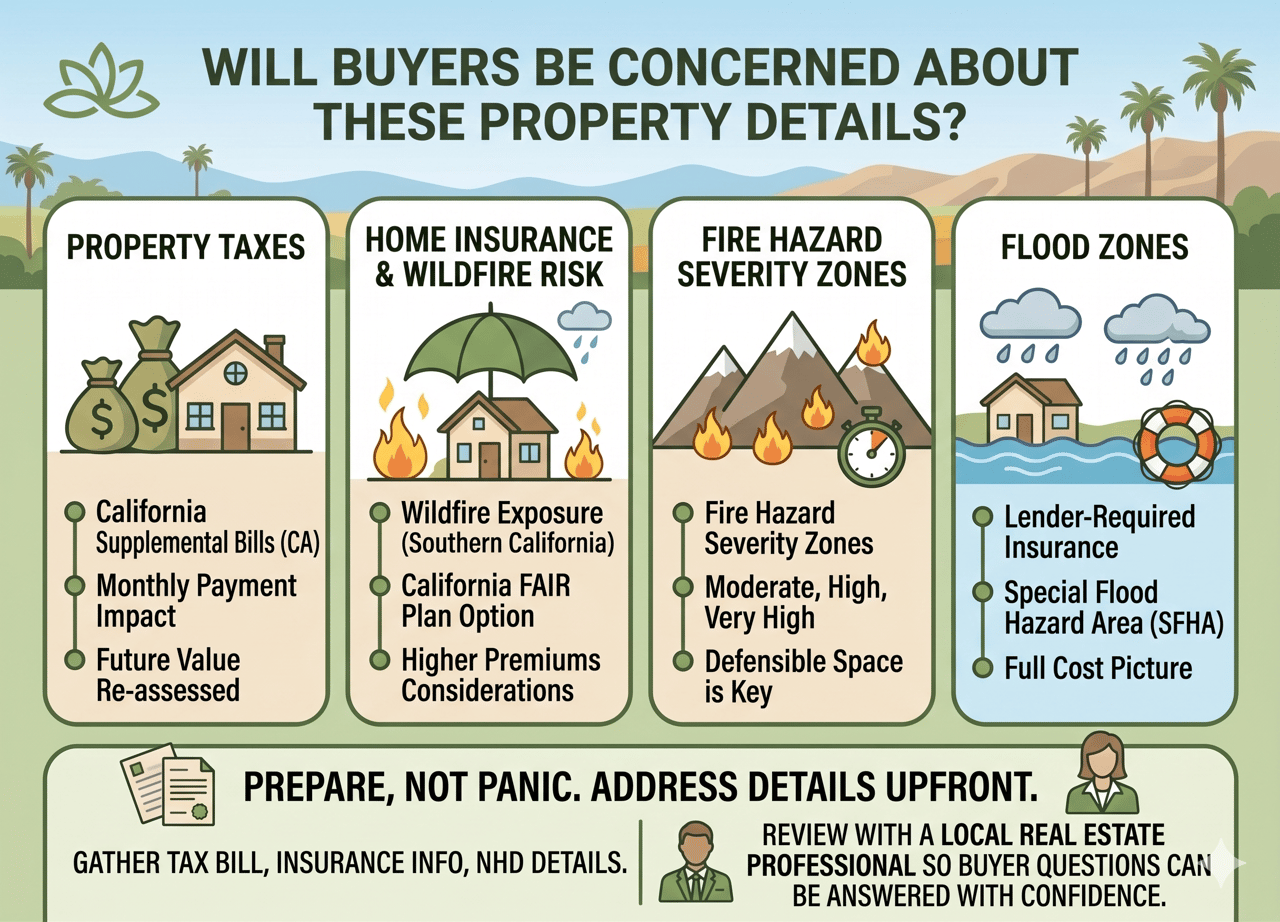
Property taxes are one part of that. In California, a buyer may receive one or two supplemental property tax bills after ownership changes, and those bills are separate from the regular annual tax bill.
Insurance is another major factor, especially in areas with higher wildfire exposure. Some buyers may want to know whether the home is easy to insure, whether the premium is higher than expected, or whether they may need the California FAIR Plan if standard coverage is difficult to obtain.
Fire zones and flood zones also come up during the disclosure process. California Fire Hazard Severity Zones are classified as Moderate, High, or Very High, and buyers may see those designations in natural hazard disclosures. California disclosure rules have also been updated to include whether a property is in a high fire hazard severity zone, not just a very high fire hazard severity zone.
Flood zones matter because federally regulated or insured lenders require flood insurance for buildings located in a Special Flood Hazard Area.
These issues can affect buyer confidence.
A buyer may love the home, but still hesitate if they are unsure about insurance costs, future taxes, or whether the property is in a higher-risk area.
This is especially true in parts of Riverside County where buyers may be comparing different neighborhoods, rural properties, hillside areas, or homes near drainage channels or open land. A buyer looking through Riverside neighborhoods or nearby communities may be thinking about more than the house itself. They may also be thinking about lifestyle, commute, maintenance, and long-term affordability.
The goal is not to make these topics sound scary. The goal is to make them clear.
A home with a low current tax bill may look especially attractive, but a buyer should understand that their future property taxes will usually be based on their purchase price, not the seller’s current assessed value.
A home in a fire hazard area may still be a great fit for the right buyer, especially if the property is well-maintained. Things like roof condition, defensible space, brush clearance, and general exterior upkeep can help buyers feel more comfortable.
A home near a creek, drainage area, or low-lying section of town may bring up flood questions. The buyer may want to know whether flood insurance is required by their lender or simply worth considering.
A home with higher insurance costs, HOA dues, Mello-Roos, or special assessments may still sell well, but the numbers need to be explained clearly. Grove Realty’s guide on closing costs when selling in Riverside County is a helpful related resource because buyers and sellers both benefit from understanding the full cost picture.
The best approach is to prepare, not panic.
If your home has a fire-zone designation, flood-zone concern, higher taxes, or insurance questions, it is better to address those details upfront. Buyers tend to handle information better when it is clear and organized early in the process.
It can also help to take care of practical repairs before listing. Items like damaged fascia, dry brush, roof issues, drainage concerns, or deferred maintenance can make buyers more nervous than the hazard disclosure itself. This Grove Realty article on repairs or updates that matter most before listing is a good place to start.
For Riverside County sellers, local guidance matters because buyer concerns can vary by neighborhood and property type. A home on a larger lot in Woodcrest, a hillside property in Canyon Crest, a home near open space in Corona, or a property in Moreno Valley may each bring different questions.
That is where Marni Jimenez can help. She can help you look at your property from a buyer’s point of view and decide what information should be gathered before the home goes on the market.
Before listing, gather your property tax bill, insurance information, and natural hazard disclosure details, then review them with a local real estate professional so buyer questions can be answered with confidence.
You’ve got questions and we can’t wait to answer them.