How Often Should My Real Estate Agent Communicate With Me?
October 13, 2026
October 13, 2026
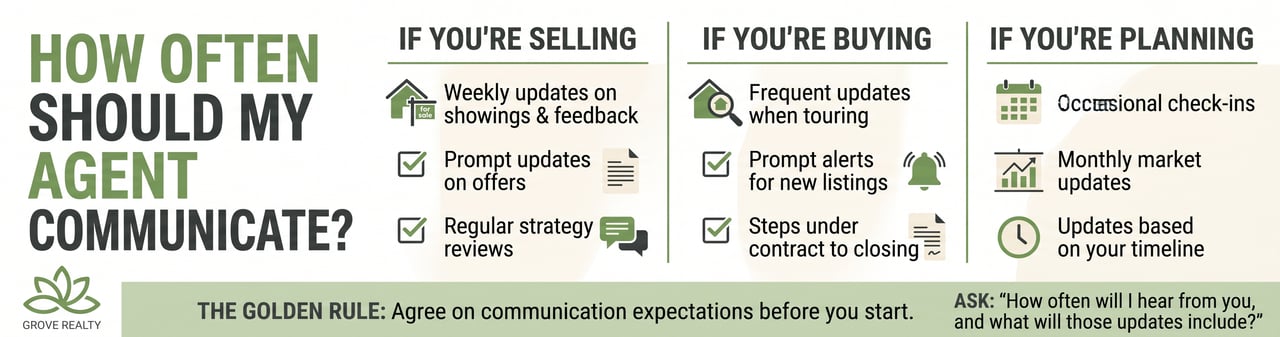
Your real estate agent should communicate with you at least once a week when you're actively buying or selling a home, and more often when important decisions or deadlines come up. You shouldn't have to chase down your agent for updates, wonder what's happening with your transaction, or feel like you're being left in the dark.
Good communication doesn't mean talking every day. It means knowing what's happening, what comes next, and when you need to make a decision. Whether you're buying your first home, selling a longtime family home, or downsizing in Riverside County, your agent should keep you informed in a way that works for you.
There's no single communication schedule that works for every buyer or seller. However, there are some reasonable expectations depending on where you are in the process.
If you're selling your home:
A weekly update is a good starting point once your home is listed. Your agent should discuss showing activity, buyer feedback, online interest, competing listings, and whether your current pricing and marketing strategy are working.
If an offer comes in, you should hear about it promptly. The same goes for counteroffers, inspection requests, and other time-sensitive developments.
Grove Realty's step-by-step home-selling guide explains the different stages of a sale and what sellers should expect along the way.
If you're buying a home:
Communication may be more frequent, especially when you're actively touring properties or preparing to make an offer.
Your agent should help you stay informed about new listings that fit your needs, showing opportunities, comparable sales, and changes that could affect your search.
Once you're under contract, expect regular updates about inspections, the appraisal, loan progress, contingencies, and closing.
For a closer look at the process, Grove Realty's home buyer's guide is a helpful resource.
If you're still planning your move:
You may only need occasional check-ins while you explore your options. Monthly contact or updates when something important changes may be perfectly reasonable.
The key is finding a communication schedule that fits your timeline rather than someone else's.
Good communication helps you make better decisions and avoid unnecessary stress.
Imagine your home has been on the market for two weeks with very few showings. You deserve more than a quick message saying there's nothing new.
Your agent should explain what the activity tells them, how your home compares with competing properties, and whether any adjustments might help.
That's part of what a real estate agent should do to protect your home sale.
Communication becomes even more important during escrow. Inspection findings, repair requests, appraisal issues, and loan conditions sometimes require decisions within a short timeframe.
You need an agent who keeps you informed before a problem becomes urgent.
The National Association of Realtors also recommends asking prospective agents how they'll keep you informed and choosing someone who understands your communication preferences.
Your agent should be providing weekly updates about showing activity and buyer feedback, even if the news isn't particularly exciting.
A useful update might sound like this:
"We had two showings this week. One buyer liked the floor plan but felt the backyard needed work. There are also two new competing listings nearby. Let's give our marketing another week and review the activity together."
This gives you actual information you can use instead of leaving you wondering what's happening.
When a property catches your attention, communication needs to move quickly.
Your agent should help you arrange a showing, review comparable sales, discuss the home's condition, and understand how to prepare a competitive offer.
This is one of the reasons having a dedicated buyer's agent can be valuable, particularly when the market is moving quickly.
Downsizing often involves more moving parts than a typical home sale.
You may be coordinating family members, sorting through belongings, preparing the property, and figuring out where you'll live next.
In this situation, your agent should provide updates that address the entire move, not just the sale itself.
Grove Realty's guide to selling a home as a senior in Riverside County covers several of these considerations.
Suppose the buyer requests a $10,000 credit after an inspection.
Your agent should contact you promptly, explain the request, discuss your options, and clarify any response deadlines.
You may decide to offer a smaller credit, make certain repairs, or decline the request.
The important thing is having enough information and time to make that decision without feeling rushed.
Some clients appreciate frequent phone calls. Others prefer a short text or a weekly email.
Neither preference is wrong.
What matters is agreeing on expectations before the transaction begins.
It's reasonable to discuss how quickly your agent will respond to routine questions, how urgent issues will be handled, and who will be available when your agent is out of the office.
If you're interviewing agents, these questions to ask before signing a listing agreement can help you understand what to expect.
Some agents handle nearly every conversation personally, while larger teams may have several people managing different parts of the transaction.
Neither approach is automatically better.
What matters is knowing who is responsible for keeping you informed and who you should contact when something important comes up.
Grove Realty also explores this distinction in local Realtor vs. big real estate team.
If your agent regularly misses calls, doesn't follow through on promised updates, or leaves important questions unanswered, it's reasonable to address the issue.
Start with a straightforward conversation about what you need.
Sometimes the problem is simply a difference in expectations. Other times, ongoing communication issues may indicate that the relationship isn't working as it should.
You should feel comfortable asking questions throughout the process, not just when you're signing paperwork.
For many buyers and sellers, working with a smaller, locally focused brokerage offers the opportunity for a more personal relationship.
Marni Jimenez, founder of Grove Realty, has been helping Riverside County buyers and sellers since 1990. Her boutique approach to real estate emphasizes personal service, honest guidance, and building lasting relationships with clients.
Whether you're selling in Riverside, buying in Corona, or planning a move elsewhere in Riverside County, having someone who understands your goals and keeps you informed can make the process much easier to navigate.
Before hiring a real estate agent, ask one question:
"How often will I hear from you, and what can I expect those updates to include?"
A good agent should be able to give you a clear answer and develop a communication plan that works for you.
You’ve got questions and we can’t wait to answer them.